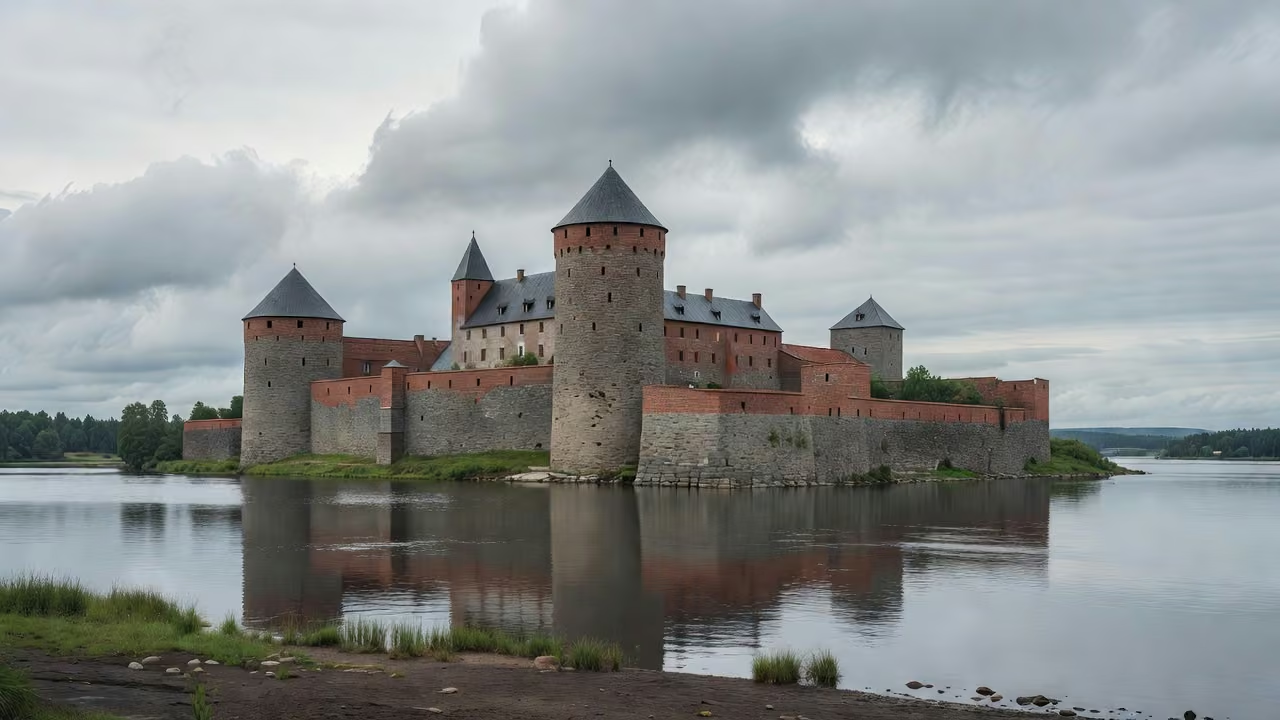
When Finland became a grand duchy in 1809, its capital was Turku, the medieval city on the Aura river. Within a few years, the Emperor decided to build a new capital elsewhere.
Helsinki, a modest coastal town with a fortress and a fine harbour, was chosen, rebuilt and transformed into the neoclassical capital we know today.
Why Helsinki
The decision to move the capital to Helsinki was strategic. The Emperor of Russia wanted the seat of the grand duchy close to, but not too close to, St Petersburg, and removed from the inconveniently western position of Turku.
Helsinki's harbour, its position facing the Baltic toward the imperial capital, and its compact size made it an attractive site for a new administrative centre.
A town built by a plan
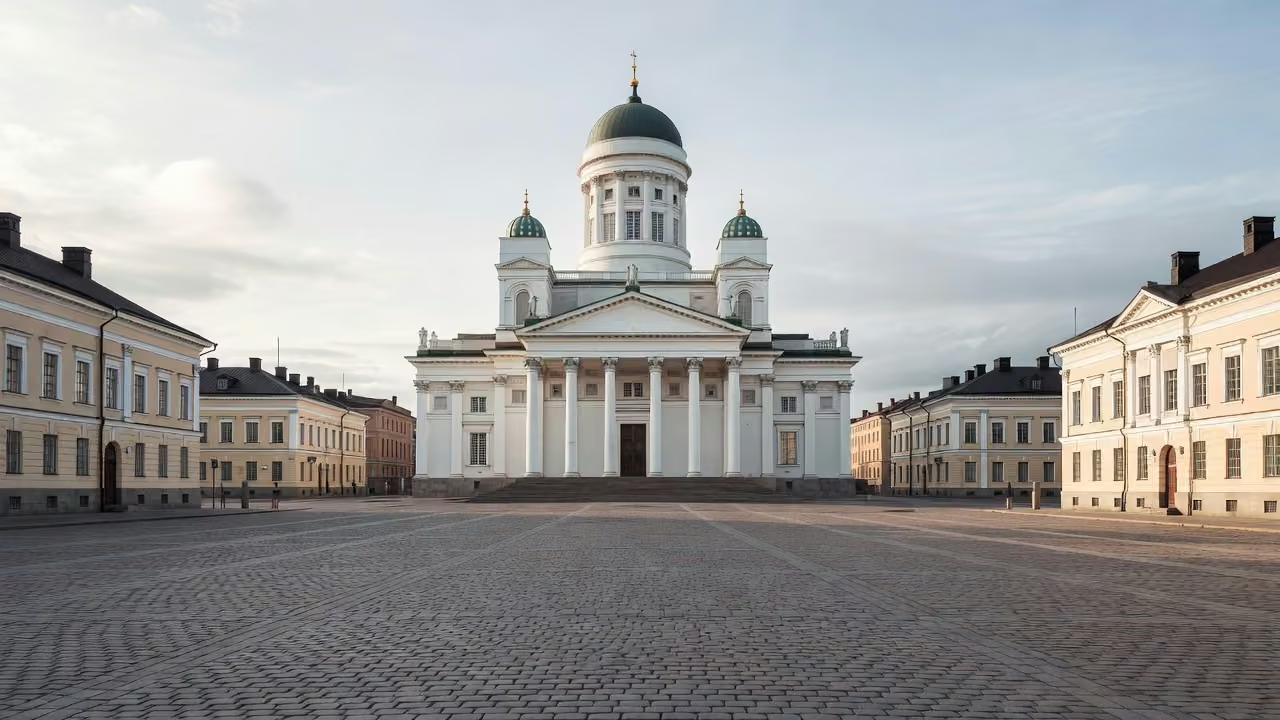
Helsinki was rebuilt to a plan drawn up in the neoclassical style of the time. The architect J. A. Ehrenström laid out broad streets and open squares, while the great architect C. L. Engel gave the city its defining buildings.
The move of the capital
In 1812, Emperor Alexander I decreed that the capital of Finland would move to Helsinki. The university, the senate and the government followed, and Turku, after 500 years, yielded its place as the seat of power.
- The University of Helsinki moved from Turku in 1828, after a great fire destroyed much of the old city.
- The Senate and government offices were built in the new capital.
- Helsinki grew from a few thousand people to a thriving capital city.
The new University and the Senate Square formed the political and intellectual heart of the grand duchy, and the city developed rapidly around them.
Building a neoclassical city
The work of C. L. Engel left Helsinki with its distinctive white neoclassical centre. The Helsinki Cathedral, the Senate, the University and the surrounding buildings form one of the most coherent classical ensembles in Europe.
The city was built on a monumental scale that anticipated future growth. Broad streets, stone buildings and a planned grid gave the small capital the dignity befitting a seat of government.
Helsinki today
Helsinki remained the capital when Finland became independent in 1917 and has grown into the Baltic metropolis of today, home to more than a million people.
Yet the old neoclassical core still stands as the proud work of the Grand Duchy era, a reminder of the moment a small town was chosen to become the capital of Finland.
Frequently asked questions
When did Helsinki become the capital of Finland?
The capital was moved from Turku to Helsinki by decree in 1812, and the government and university followed in the following years.
Who designed the neoclassical centre of Helsinki?
The German-born architect Carl Ludvig Engel designed the cathedral, the Senate and much of the surrounding neoclassical ensemble.
Why was the capital moved at all?
For strategic reasons: the Emperor wanted the capital close to St Petersburg and removed from the western position of Turku, and Helsinki offered a fine harbour and a site to build a new administrative city.
Keep reading