The Viking Age is often told from the ships and raids of Scandinavia, but Finland had its own place in this busy northern world. Its coasts and rivers sat on valuable trade routes linking east and west.
While no unified Finnish state yet existed, the tribes of the region were active partners in a network of exchange, influence and conflict that reached from the Baltic to the rivers of Russia.
Finland in the Viking world
From the late eighth century onward, the Baltic became a lively highway of ships, merchants and warriors. Finland's southern and western coasts faced directly onto this traffic, and its islands and harbours were known to seafarers.
The word 'Finland' itself appears in sources from this era. It usually meant the southwestern coast, but over time the name came to describe the whole land and its people.
Burials and finds
Archaeologists have found rich boat graves and weapon hoards in Finland from this period. They show a society with strong contacts to both Scandinavia and the east, and one familiar with the customs of the wider Viking world.
Trade across the Baltic
Finnish furs, seal products, wax and amber were prized goods in the markets of the Viking Age. In return came silver, weapons, glass and textiles, carried on ships and along the river routes.
- Furs of beaver, marten and squirrel were the region's most valuable export.
- Silver and Arabic coins reached Finland through long-distance trade.
- Merchants used seasonal markets and safe harbours along the coast.
The eastern route
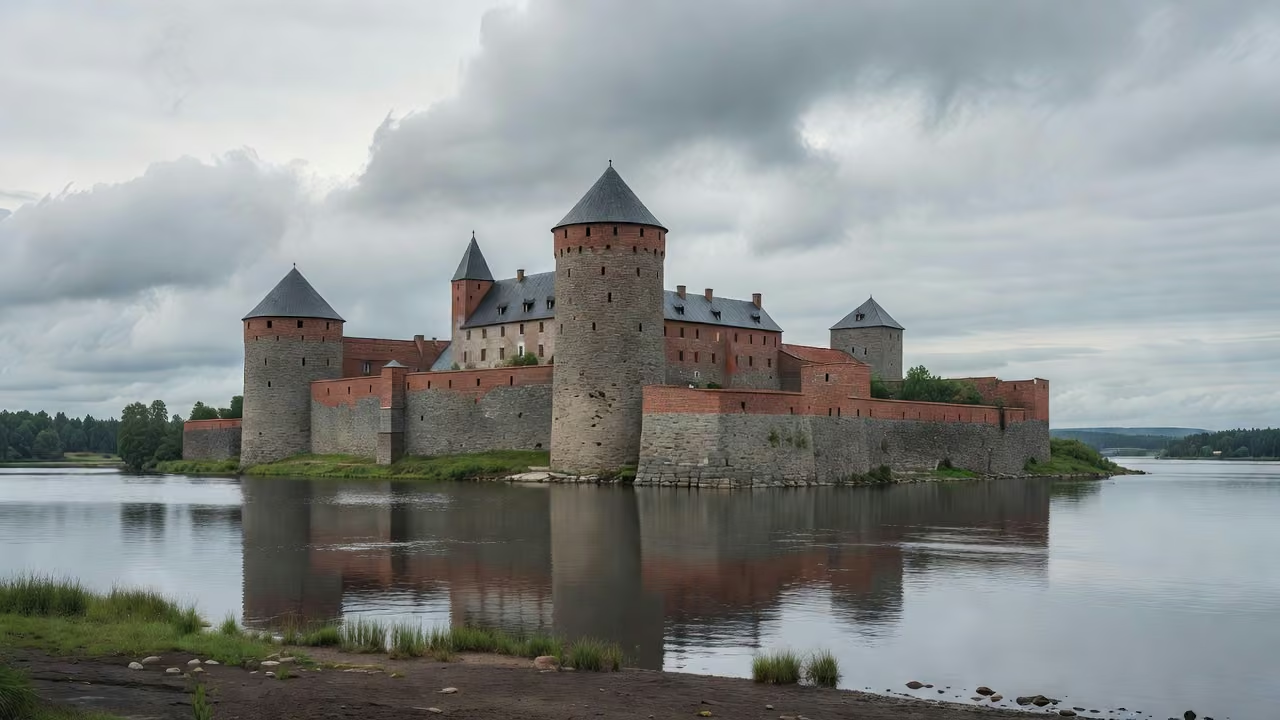
One of the great routes of the Viking Age ran from the Baltic up the Neva and Volkhov rivers toward the inland heart of what later became Russia, reaching the markets of Novgorod, Kiev and beyond toward Byzantium.
Finland lay beside the western end of this waterway. The eastern tribes, in particular, were drawn into the orbit of expanding trade and power centered on the Gulf of Finland.
A land of many tribes
By the end of the Viking Age, the people of Finland were organised into distinct tribal groupings, each with its own leaders, dialects and customs. The main groups included the Finns of the southwest, the Tavastians of the interior and the Karelians of the east.
These tribes were sometimes allies and sometimes rivals, but together they formed the human landscape out of which a single Finnish nation would eventually grow.
Frequently asked questions
Were Finnish people Vikings?
Most of Finland's inhabitants were not Viking raiders in the same way as the Norse seafarers, but they shared their world as traders, partners and sometimes opponents in the Baltic networks.
What did Finland trade in the Viking Age?
Furs, seal products, wax and amber were the main exports, exchanged for silver, weapons, glass and textiles.
Who were the main tribes of Finland?
The best-known groups were the southwestern Finns, the Tavastians of the interior and the Karelians of the east, each with their own identity and leaders.
Keep reading