In 1808 the armies of Russia and Sweden clashed on Finnish soil, beginning the war that would redraw the map of the north forever.
By 1809 Finland had passed from the Kingdom of Sweden to the Russian Empire, but not as a conquered province. It became an autonomous grand duchy, with its own law, its own parliament and a future of its own.
The road to war
The great powers of Europe were at war, and the Baltic was caught between them. Russia, seeking to secure its capital St Petersburg against attack from the north, viewed the Swedish-held coast of Finland as a strategic threat.
After the treaties of Tilsit in 1807, the way was open. In early 1808 Russian forces crossed the border, and the Finnish War began.
A difficult campaign
The war was hard fought and long. Swedish and Finnish troops resisted bravely, and the winter fighting of 1808 is remembered in Finnish history for its hardship and courage. Yet Russia's larger forces gradually took control of the land.
The war of 1808-1809
The decisive campaigns unfolded over two years. The Swedish army, and with it the Finnish regiments, fought a series of battles and retreats, while Russian columns occupied the towns and fortresses.
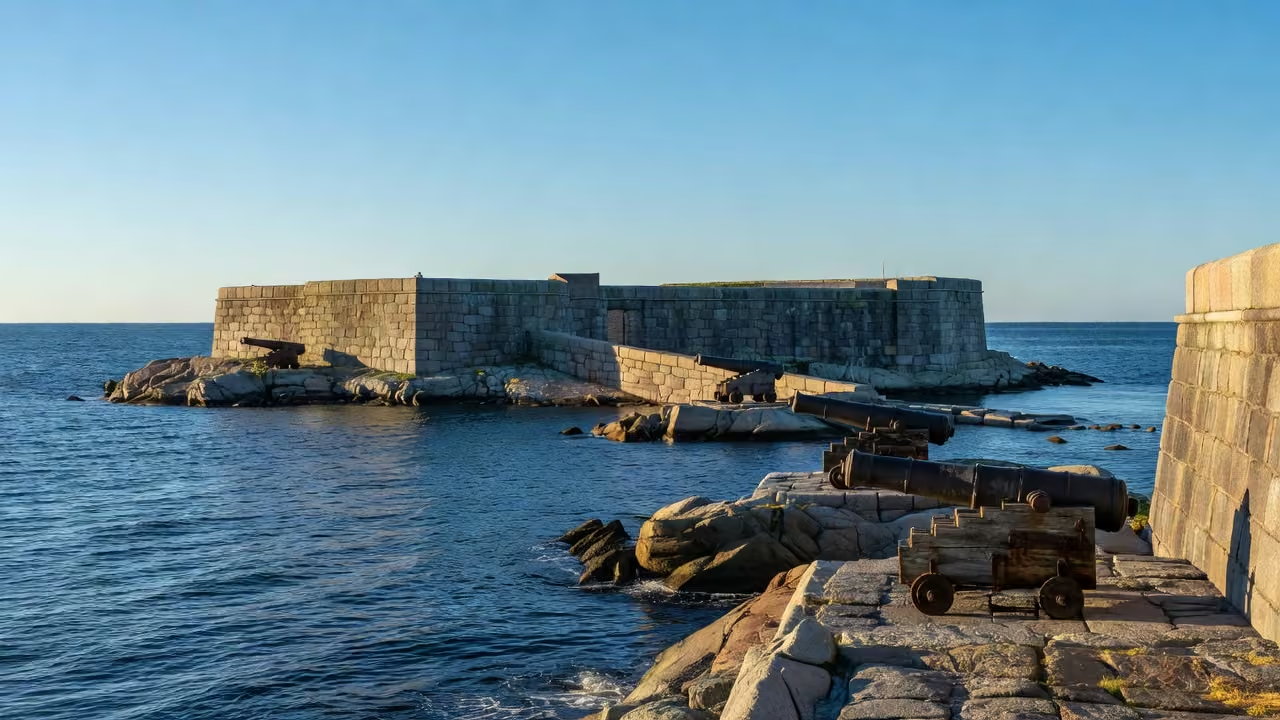
- The fortress of Sveaborg (later Suomenlinna) surrendered in 1808.
- The Battle of Oravais in September 1808 was the last major clash of the war.
- By 1809 Russian forces reached all the way to the Åland islands and the frozen Gulf of Bothnia.
In the far north, the conflict spilled onto Swedish soil itself. With the war lost, Sweden had no choice but to seek peace on Russia's terms.
The Diet of Porvoo
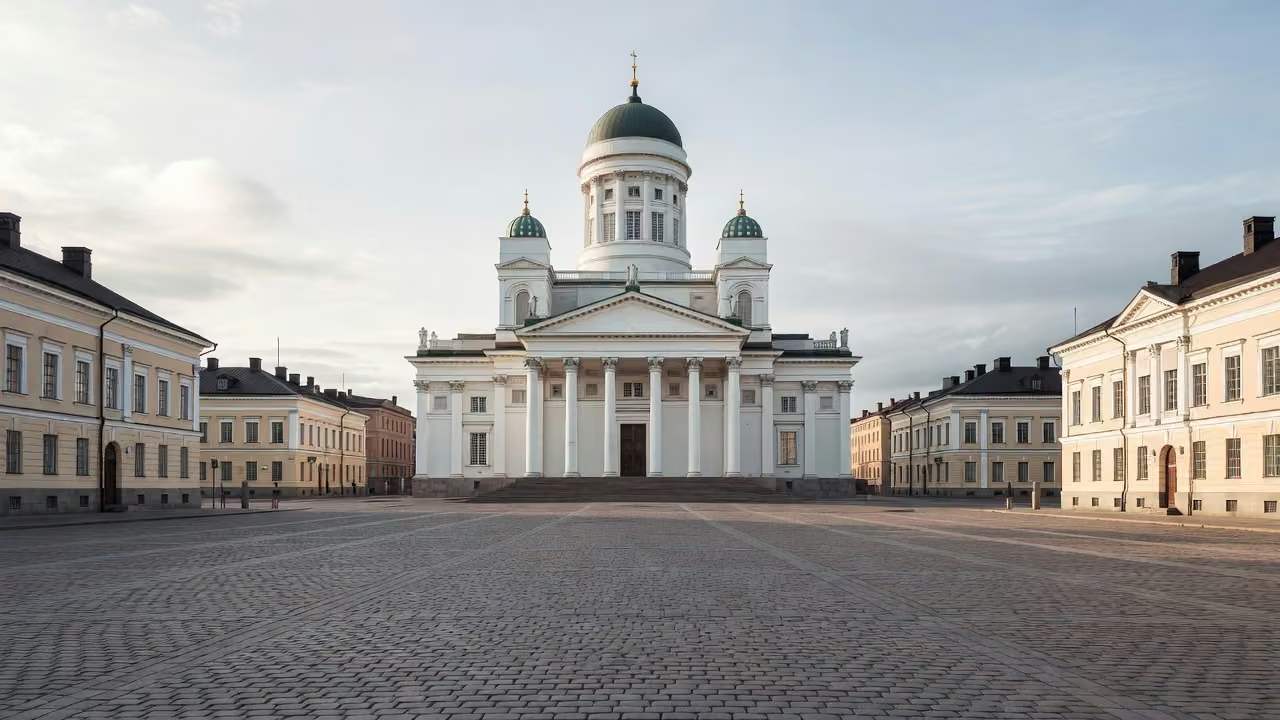
In March 1809, Emperor Alexander I convened the estates of Finland in the town of Porvoo. There he swore to uphold the Finnish constitution, religion and privileges, and the estates swore loyalty to him in return.
This is known as the Diet of Porvoo, and it founded the Grand Duchy of Finland. Finland kept its own laws, its Lutheran faith and its institutions, and it gained a measure of self-government within the Russian Empire.
A new era begins
The Treaty of Fredrikshamn in September 1809 confirmed the transfer of Finland to Russia. The era of the Swedish crown was over, and a new chapter, the Grand Duchy of Finland, had begun.
Paradoxically, the change soon strengthened Finnish identity. The Emperor allowed Finland to keep its own governance, and that autonomy became the seedbed of a modern Finnish nation.
Frequently asked questions
When was the Finnish War fought?
The Finnish War was fought from 1808 to 1809, ending with the transfer of Finland from Sweden to Russia.
What was the Diet of Porvoo?
A meeting of the Finnish estates in 1809 at which Emperor Alexander I confirmed Finland's laws and privileges, founding the autonomous Grand Duchy of Finland.
Did Finland become a Russian province?
No. Finland became an autonomous grand duchy with its own laws, parliament and administration, within the Russian Empire.
Keep reading