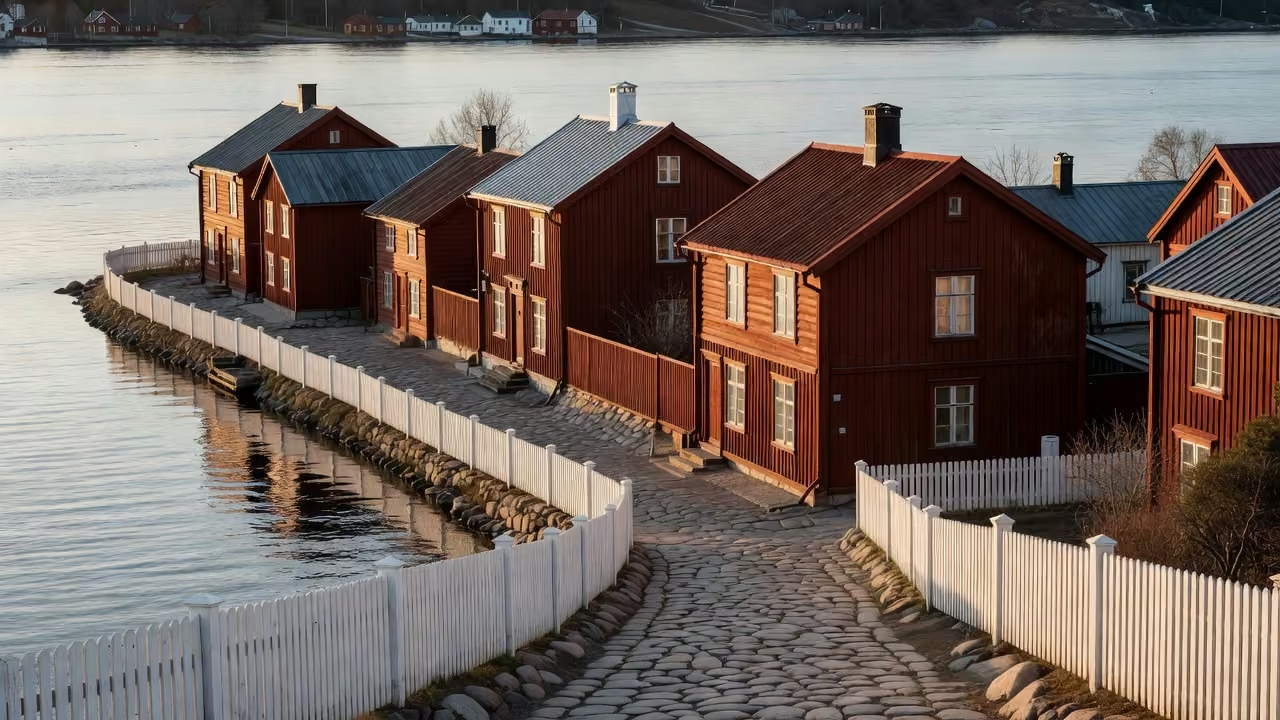
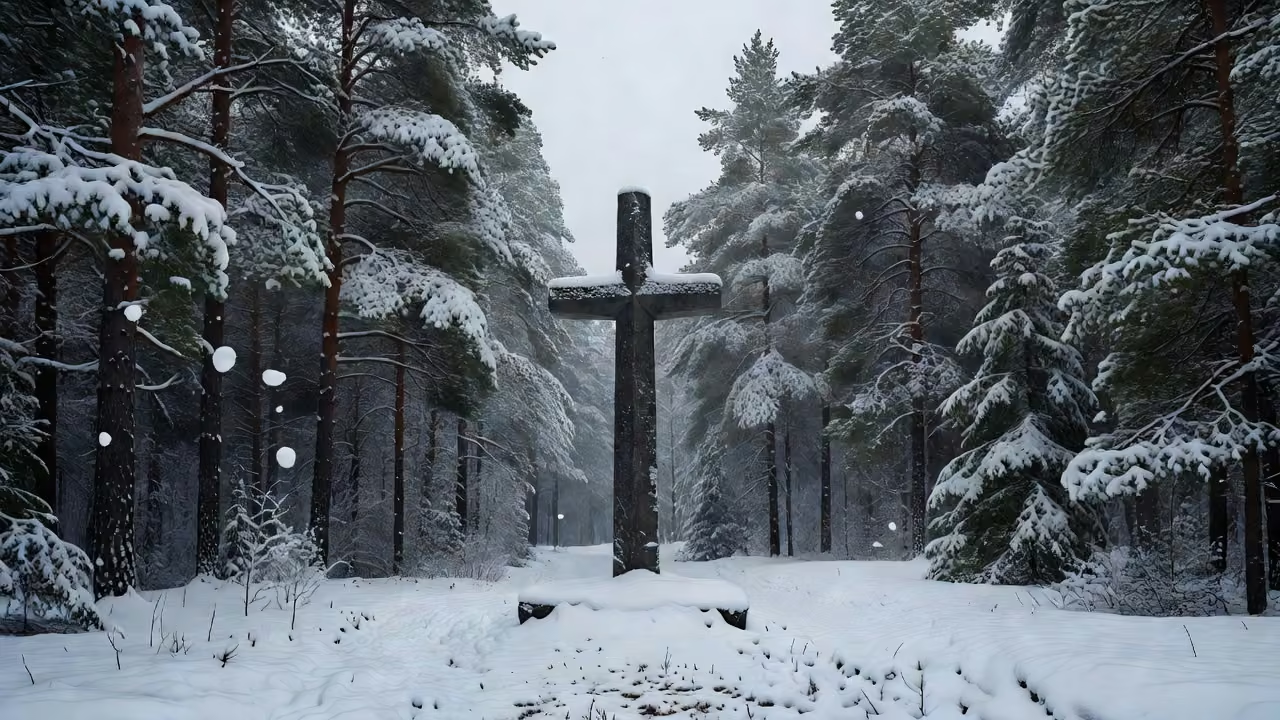
From the 12th century until 1809, Finland was an integral part of the Kingdom of Sweden. Kings, bishops, knights and settlers shaped the land, and Swedish law and administration reached into every parish.
These six centuries left a deep mark on Finland, building the institutions, legal traditions and Western ties on which modern Finland was founded.
The Swedish connection
Swedish expansion into Finland came gradually, through a mixture of trading, crusading and settlement. The western and southern coasts were reached first, then the interior and the eastern borderlands.
Finland was not a colony in the modern sense. Its people became subjects of the Swedish crown with the same rights and duties as subjects in Sweden proper, and Finns served in the army, the law courts and the administration.
The medieval crusades
Tradition records a series of crusades to Finland, traditionally dated to the 12th and 13th centuries. Their aim was partly religious conversion and partly political control. As a result, Finland was drawn firmly into the Western Christian world under Swedish rule.
Law, castles and administration
To hold the land, the crown built castles and organised the country into provinces, parishes and manors. The castles of Turku, Häme and Viipuri were both military strongholds and centres of administration.
- Castles guarded the coasts, rivers and trade routes.
- Provincial courts applied a common law to all free men.
- The tax system supported the crown, the church and the nobility.
A national council and, later, the Diet of the Estates gave nobles, clergy, burghers and peasants a voice in the kingdom. Finnish representatives travelled to the assemblies in Sweden to help decide matters of the realm.
The land of Sweden
Over the centuries, Swedish became the language of administration, the church and the nobility, while Finnish remained the everyday speech of the majority. Swedish laws, customs and place names mingled with the older Finnish world.
This long partnership ended only in 1809, when war redrew the map. Yet the era of the Swedish crown left behind a legal culture, a parliament and a Western orientation that Finland carried into its next chapter.
Frequently asked questions
How long was Finland part of Sweden?
Roughly 600 years, from the 12th century until 1809, when Finland became an autonomous grand duchy under the Russian Empire.
Was Finland a Swedish colony?
No. Finland was an integral part of the Kingdom of Sweden, and its people had the same rights and duties as subjects in Sweden proper.
What did the Swedish era leave behind?
A common legal tradition, a parliament of estates, Western Christian institutions and a Western cultural orientation that shaped modern Finland.
Keep reading